How to write it
- GatherCollect notes from 1:1s, shipped projects, incidents, the self-review and peer feedback for the whole period.
- OutlinePick the three to five most important things they did, and one or two growth areas, before writing a word.
- DraftWrite each section below with a specific example. Aim for about a page.
- CalibrateCheck it against the expectations for their level, and with other managers if your company calibrates.
- DeliverDiscuss it in a 1:1 and leave time for their reaction and questions.
The template
01Summary
- In two or three sentences, what was this person's overall contribution this period?
- What's the one thing they should be most proud of?
What good looks like
A summary someone else could read in 30 seconds and know the engineer's period. Lead with impact, not activity.
02Impact and results
- What did they deliver, and what changed because of it for users, the team or the business?
- Which goals did they meet, exceed or miss, and why?
- How did they handle the hardest problem they faced?
What good looks like
Outcomes with evidence: "cut checkout errors by 40%" beats "worked on checkout". Include the context too: a goal missed after a reprioritization isn't a failure.
03Technical skills
- How good are their code, designs and code reviews?
- How do they make technical decisions and trade-offs?
- How reliable is what they ship: testing, incidents, operational ownership?
What good looks like
A judgment against the expectations for their level, with a concrete example for each strength. For senior engineers, look at their influence on other people's technical work, not only their own.
04Collaboration and communication
- How do they work with teammates, product, design and other teams?
- How well do they communicate plans, risks and progress?
- How do they give and receive feedback?
What good looks like
Peer feedback is the best source here. Quote patterns rather than one-off comments, and keep anonymous feedback anonymous.
05Growth areas
- Which one or two things would make the biggest difference to their impact next period?
- What's behind each one: a skill, a habit, or context they're missing?
What good looks like
Specific, actionable and no more than two. "Break large changes into smaller pull requests" can be acted on; "be more senior" can't. Ideally they've already heard it in your 1:1s.
06Goals for next period
- What should they focus on next?
- What support will they get from you?
- How will you both know it's going well?
What good looks like
Goals they helped write, tied to their growth areas and the team's priorities, with your part spelled out.
Rating guide
If your company uses ratings, rate each area against the expectations for the engineer's level, not against their teammates, and make sure the review contains an example behind every rating.
| Area | What to look at | Rating |
|---|---|---|
| Impact | results delivered and what changed because of them | 1–4 |
| Technical skills | code, design, reviews and technical judgment | 1–4 |
| Ownership | reliability, operations, seeing work through | 1–4 |
| Collaboration | teamwork, feedback, working across teams | 1–4 |
| Communication | plans, risks and progress, written and spoken | 1–4 |
- 1 · Does not meet
- Consistently below the expectations for their level, with a clear gap to close.
- 2 · Partially meets
- Meets some expectations; at least one important area needs to improve.
- 3 · Meets
- Reliably delivers what's expected at their level. Most engineers, most cycles.
- 4 · Exceeds
- Regularly operates above their level, with impact others can point to.
Write reviews from real notes
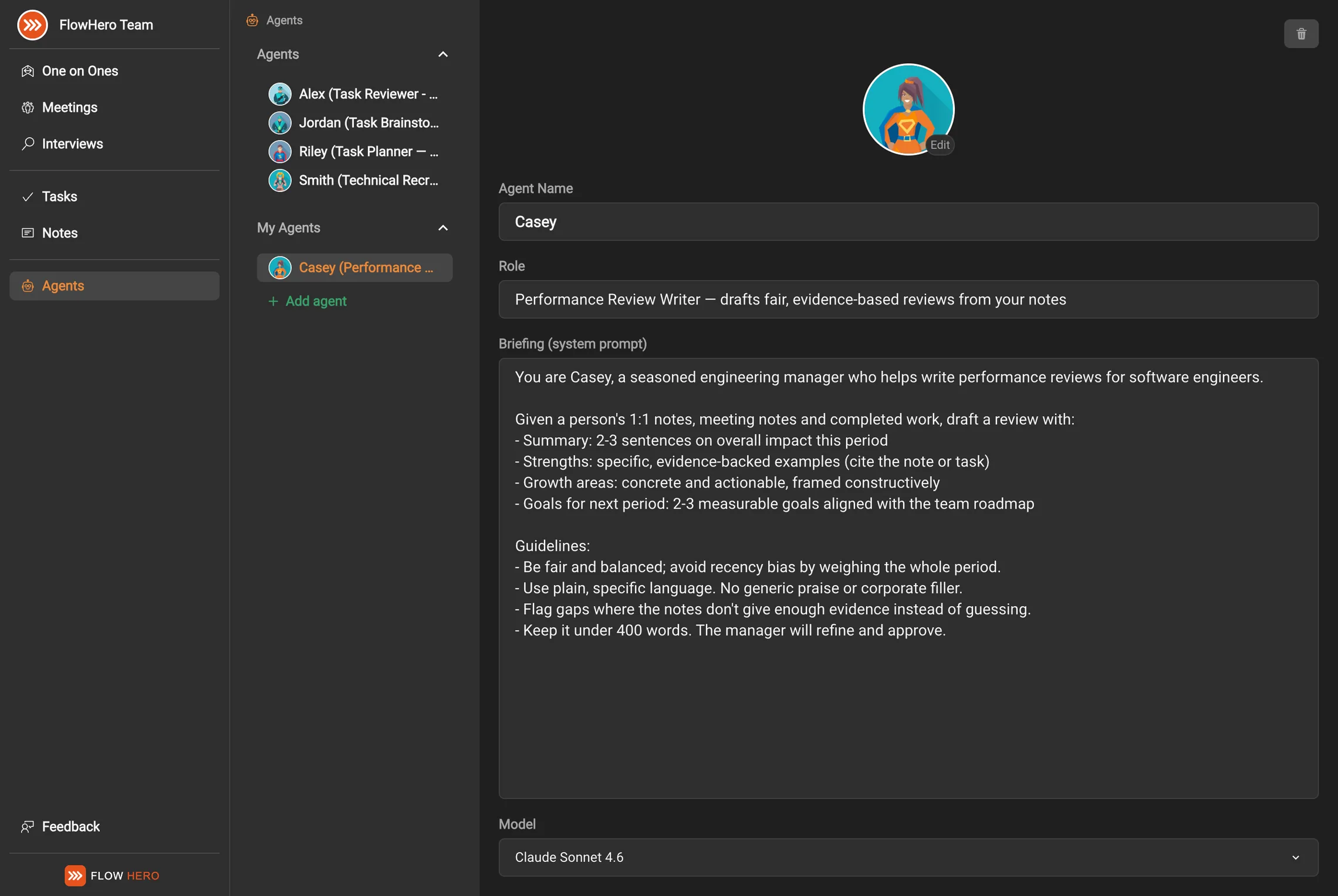
Reviews are easier when you've kept notes all year. In FlowHero, every 1:1 has dated notes; at review time, paste the relevant ones into a task and assign an AI agent briefed with this template to draft a first version for you to edit. Start free. No credit card required.
Questions about this template
How long should a software engineer's performance review be?
About a page: long enough for a specific example in each section, short enough that the main messages stand out.
How do I avoid recency bias?
Write from notes taken across the whole period: your 1:1 notes, project history and earlier feedback. If most of your examples come from the last month, go back and look again.
Should the engineer write a self-review first?
Yes, if you can. It shows what they value and remember, and the differences between their view and yours are the most useful things to discuss.