How to run it in 45 minutes
- 0–5 minIntroductions, and why this meeting is different from later 1:1s
- 5–20 minTheir background and how they like to work
- 20–30 minCommunication and feedback preferences
- 30–40 minGoals and growth
- 40–45 minHow your 1:1s will run, and next steps
The agenda
01Getting to know them
- What should I know about you that wouldn't show up on your CV?
- What are you most proud of from your last role?
- What did your best manager do that you'd like me to keep doing?
- And what did a manager do that you'd rather I avoided?
What to listen for
What they value in a manager, in their own words. Write it down: it's the most useful note you'll have for the next year.
02How they like to work
- When do you do your best work? Mornings, afternoons, long focus blocks?
- How do you prefer to get context on a new project: docs, conversations, or diving into the code?
- What kind of work energizes you, and what drains you?
- How much autonomy do you want on a new task, and when should I check in?
What to listen for
Concrete preferences you can act on: focus time, how much detail they want up front, how often to check in. New hires often defer to you, so offer examples of options.
03Communication and feedback
- How do you like to receive feedback: in the moment, in our 1:1s, or in writing?
- Would you rather hear something uncomfortable early, or once it's certain?
- What's the best way to reach you for something urgent? And for something that isn't?
- How will I know when you're stressed or overloaded?
What to listen for
Their signals for stress or disengagement, and the feedback style that works for them. Agreeing on this early makes the first difficult conversation much easier.
04Goals and growth
- What do you want to get out of this role in the next six months?
- What would make your first 90 days a success?
- Which skills do you want to grow here?
- Is there anything about the team or the role you're unsure about?
What to listen for
Their goals, not the ones you'd pick for them. For new hires, a 30/60/90-day picture gives you both something to check against.
05How we'll work together
- Here's how I work and what you can expect from me…
- How often should we meet, and for how long?
- What would you like our 1:1s to cover?
- Is there anything you'd like to ask me?
What to listen for
Leave with an agreed cadence, a shared agenda for future 1:1s and one thing you'll each do before the next meeting. Explaining your own working style invites them to be just as open.
Run your 1:1s in FlowHero
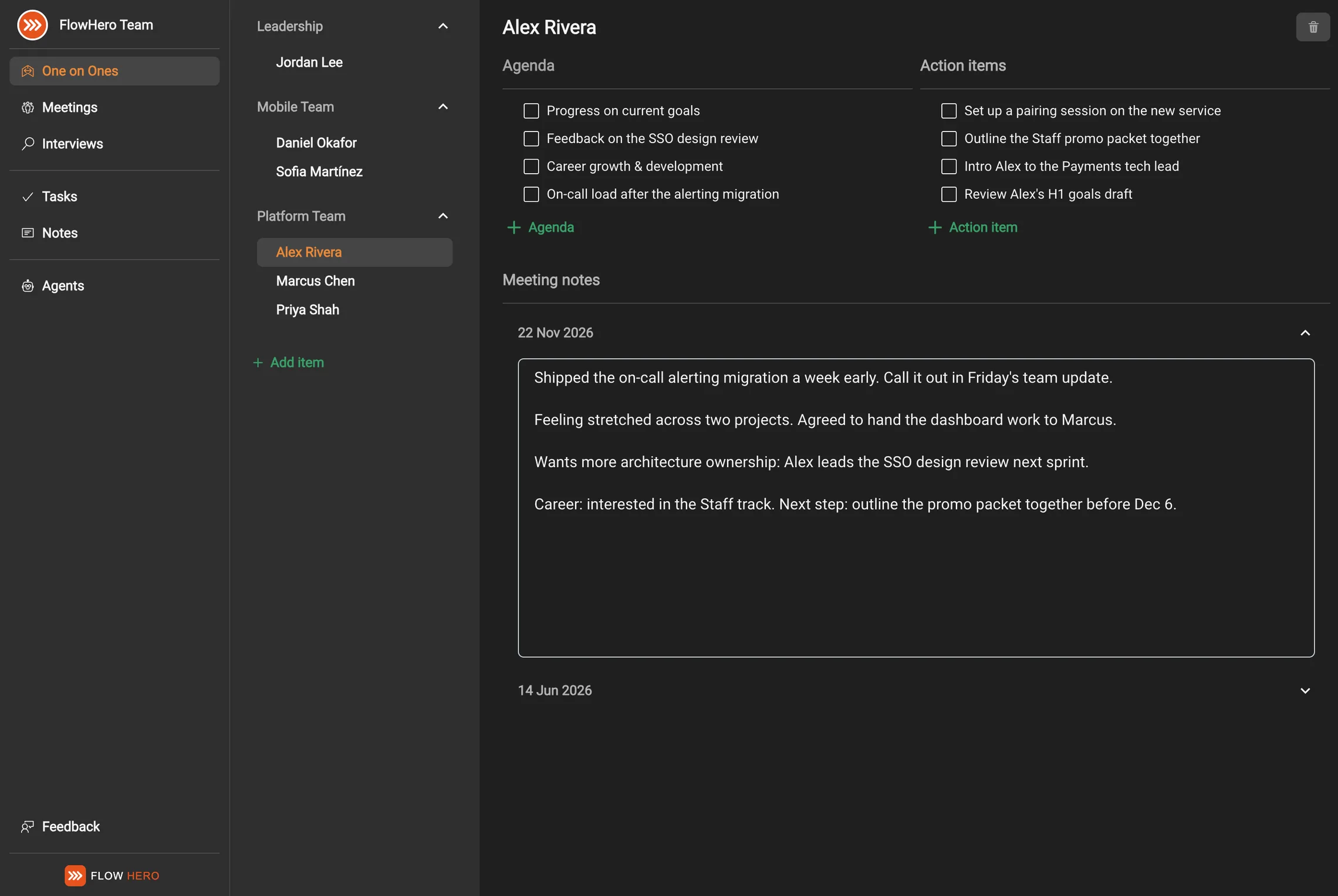
Give each person you meet with their own 1:1 in FlowHero: add these topics as agenda items, take a dated note each time you meet, and track action items until they're done. Your 1:1 notes stay private to you. Start free. No credit card required.
Questions about this template
When should the first 1:1 happen?
In a new hire's first week, ideally in the first two or three days. When you take over an existing team, within your first week or two.
Should I talk about performance in the first 1:1?
Not about past performance. Talk about expectations for the role and what success looks like in the first 90 days; leave feedback and reviews for later 1:1s.
What if I'm taking over an existing team?
Use the same questions and add three more: what's working well that I shouldn't change, what isn't working, and what do you expect from a new manager? Listen more than you plan in the first weeks.