How to run it in 30 minutes
- 0–5 minCheck-in: how they're doing, not what they're doing
- 5–15 minTheir topics first, from the shared agenda
- 15–22 minBlockers and priorities (once a month, swap this for growth)
- 22–27 minFeedback, both ways
- 27–30 minRead back the action items: who does what, by when
The agenda
01Check-in
- How are you doing, really?
- What's taking most of your energy this week?
- On a scale of 1 to 10, how was your week? What would have made it a point higher?
- Is there anything outside work you'd like me to know about?
What to listen for
Changes in energy and mood over several weeks, not single answers. A short "fine" from someone who usually talks is worth a gentle follow-up. Notes from past 1:1s are what let you see the trend.
02Their topics
- What's on your mind that you'd like to talk about?
- What did you add to the agenda this week?
- Is there anything you've been hesitant to bring up?
What to listen for
If they rarely bring topics, the 1:1 may feel like your meeting. Ask them to add items to a shared agenda before you meet, and wait through a silence instead of filling it.
03Work and blockers
- What's blocking you or slowing you down?
- Is there a decision you need from me or from someone else?
- Are your priorities clear? Is anything competing for your time?
- Which part of your work feels least clear right now?
What to listen for
The problems only a manager can fix: decisions, access, priorities, friction with other teams. Resist turning this into a status update; status belongs in standups and on the task board.
04Feedback, both ways
- What's one thing I could do differently to support you better?
- Here's something I noticed this week that went well…
- Here's one thing I'd like you to try differently…
- How is the team working together, from where you sit?
What to listen for
Specific and recent beats general and saved up. Small feedback every week makes reviews free of surprises. When they give you feedback, thank them and act on it visibly: that's what keeps it coming.
05Growth (monthly)
- What did you learn this month?
- What kind of work would you like more of, or less of?
- Is there a skill you want to build next quarter? How can I help?
- Where do you want to be in a year, and are we on track?
What to listen for
Concrete next steps, such as a project, a stretch task or someone to learn from, rather than agreement that growth matters. Revisit the same goals each month so they don't quietly expire.
06Wrap-up
- What are we each taking away from today?
- Is there anything you'd like on next week's agenda?
What to listen for
Action items with owners and dates, written where you'll both see them next week. Start the next 1:1 by checking them.
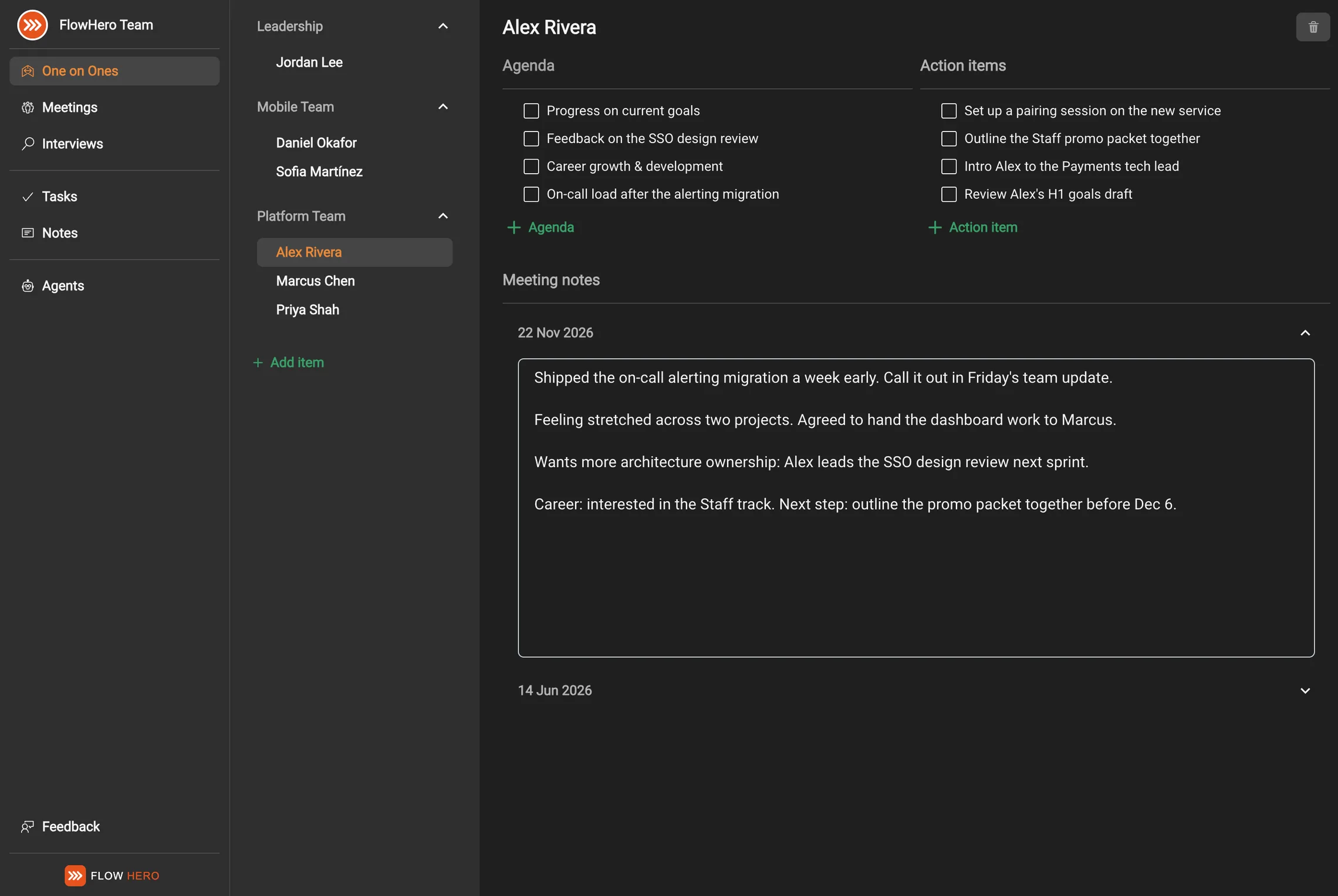
Run your 1:1s in FlowHero
Give each person you meet with their own 1:1 in FlowHero: add these topics as agenda items, take a dated note each time you meet, and track action items until they're done. Your 1:1 notes stay private to you. Start free. No credit card required.
Questions about this template
How long should a weekly 1:1 be?
Thirty minutes weekly suits most engineers; 45 to 60 minutes every two weeks works too, especially for senior engineers. Consistency matters more than length: move a 1:1 rather than cancel it.
Who should set the 1:1 agenda?
Mostly the direct report. It's their meeting: ask them to add topics to a shared agenda before you meet, and add yours after theirs.
What if they say there's nothing to discuss?
Keep the slot and use the growth or feedback questions. "Nothing to discuss" meetings often turn into the most useful ones, and a 10-minute 1:1 is still worth having.