How to run it in 30 minutes
- 0–5 minIntroductions, and why you're meeting
- 5–15 minThe team and the work
- 15–22 minWhat could be better
- 22–27 minTheir growth, and their questions for you
- 27–30 minWhat you'll do with what you heard
The agenda
01Opening
- What are you working on right now, and how's it going?
- What's the best part of your job at the moment?
- Is there anything you'd like to know about me or my role?
What to listen for
A relaxed start matters more than usual: many engineers are nervous in a skip-level. Share something about yourself first.
02The team
- How would you describe the team's mood right now?
- What's one thing the team does really well?
- What slows the team down the most?
- Do you have what you need to do your best work?
What to listen for
Patterns across several skip-levels, not one person's view. If three engineers mention the same process, that's a signal; if one does, it's a data point.
03The work and the organization
- Do you understand why your current project matters?
- Is there something we're building that you think we shouldn't be, or something we should?
- What's one thing you'd change about how engineering works here?
- How well does information reach you about decisions that affect your work?
What to listen for
Whether strategy reaches the people doing the work. Unclear priorities and surprise decisions are often fixable at your level.
04Management and support
- What does your manager do that helps you most?
- Is there anything you'd like more of from your manager?
- Do you get enough feedback on your work?
What to listen for
Ask about support, not for judgments of their manager, and never ask them to rate their manager. What's going well is as worth sharing with the manager as what isn't.
05Growth and closing
- Where would you like to grow in the next year?
- Is there anything I can do to help?
- Is there anything else you think I should know?
What to listen for
The last question often brings the most important answer. Close by saying what you'll do with what you heard, then follow up visibly.
Run your 1:1s in FlowHero
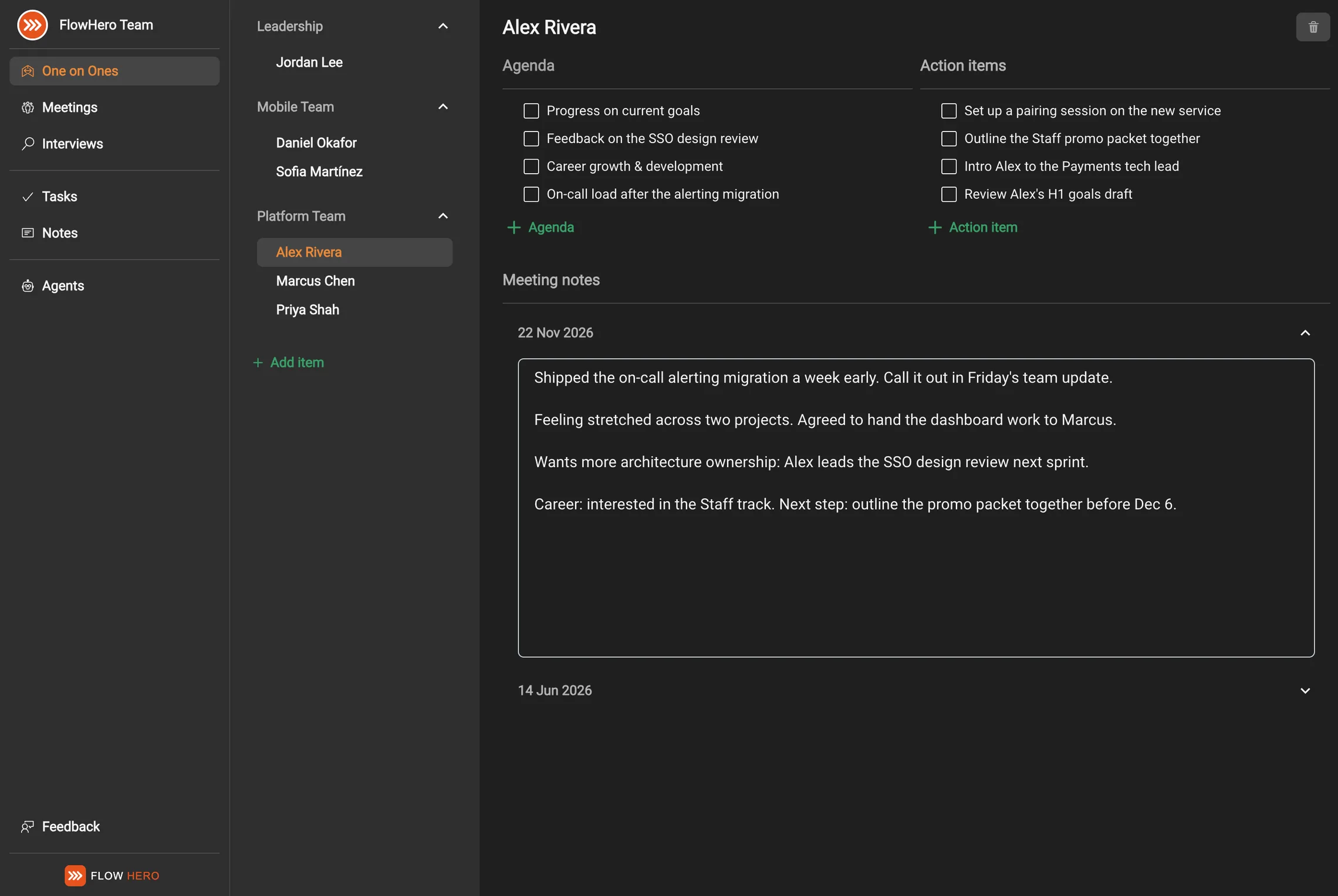
Give each person you meet with their own 1:1 in FlowHero: add these topics as agenda items, take a dated note each time you meet, and track action items until they're done. Your 1:1 notes stay private to you. Start free. No credit card required.
Questions about this template
How often should skip-level meetings happen?
Once a quarter for each person is common for directors. In larger organizations, group skip-levels with three to five people can fill the gaps in between.
Should I tell the manager about a skip-level?
Yes, always. Explain the purpose, share themes afterwards rather than individual quotes, and raise anything about the manager with them directly and carefully.
What if someone raises a problem with their manager?
Listen, thank them, and don't promise an outcome. Look for patterns before acting, and handle it with the manager directly, without revealing your source unless the person agrees.